Everest
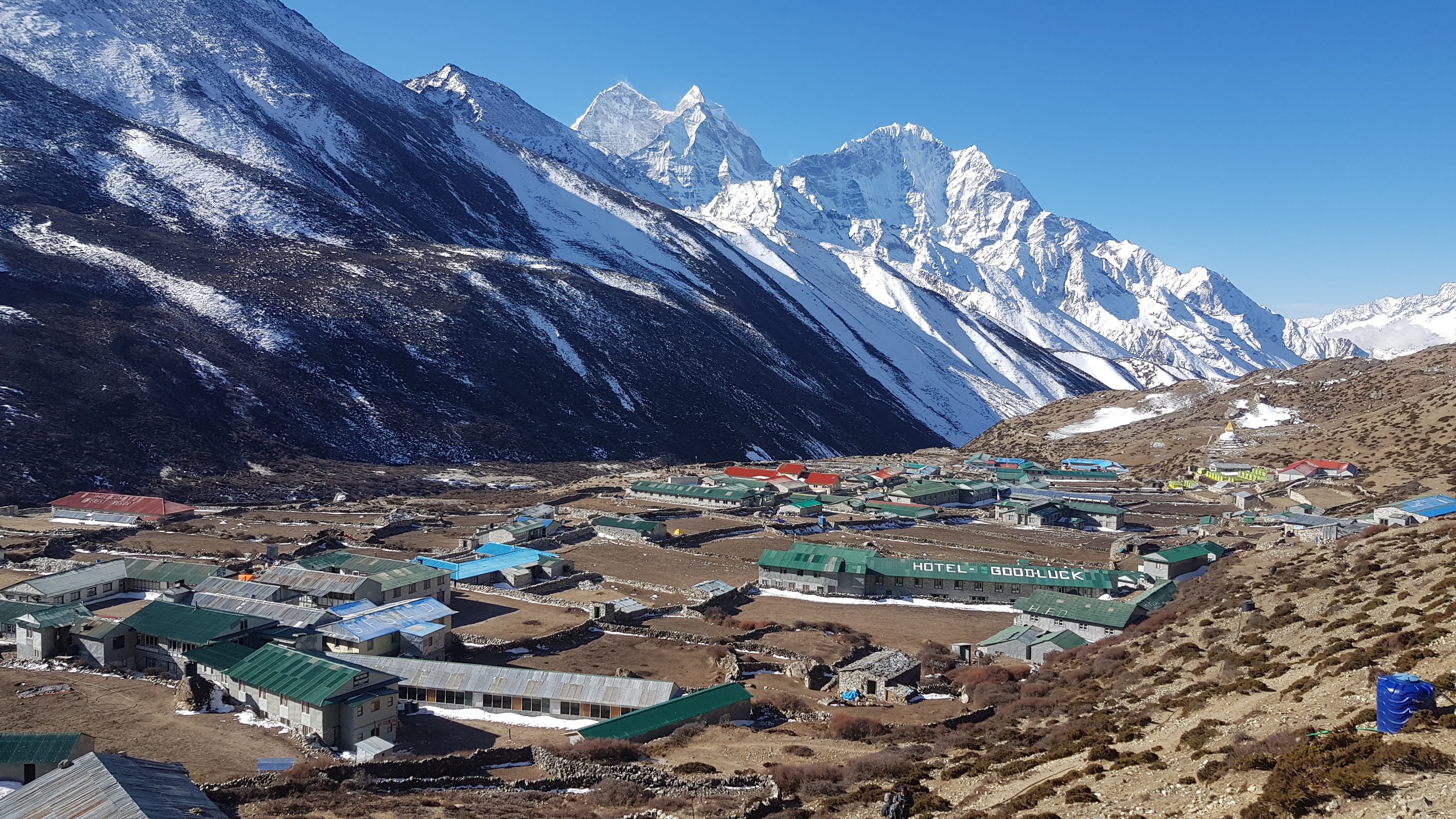
Sagarmatha National Park in the Khumbu region of Nepal comprises massive rocky landscapes, ravines, high mountain glaciers, and deep valleys in the Himalayas. Mount Sagarmatha is the iconic pinnacle of Sagarmatha National Park. Mount Everest (Sagarmatha, 8,848 m) is the highest peak in the world, as are Lhotse (8,501 m), Cho Oyu (8,153 m), and Nuptse (7,896 m). Other peaks above 6,000m are Lhotse, Cho Oyu, and Thamserku. Amadablam and Pumori are towering presences in Sagarmatha National Park. The park is also the upper catchment area of the Dudhkoshi and Bhotehoshi Rivers. UNESCO listed SNP as a World Heritage Site of Natural Importance in 1979. Gokyo and the associated lakes are listed as Ramsar sites.
Sagarmatha is an exceptional area in the Mahalangur mountain range, characterised by dramatic mountains, glaciers, and deep valleys. It is home to the world's highest peak (8,848.86 m), locally known as Chomolungma, meaning “Goddess Mother of the World” or “Goddess of the Valley.” In Sanskrit, Sagarmatha translates as “Peak of Heaven.” The peak is also known as Zhumulangma Feng in China and Mount Everest in English. Additionally, Sagarmatha Park includes seven other peaks over 7,000 m, with most of the park situated above 3,000 m in rugged terrain, deep gorges, glaciers, and massive rocks. The forest in Sagarmatha National Park mainly consists of silver fir, birch, rhododendron, and juniper trees, alongside scrub and alpine plant communities at higher altitudes. Unlike other parts of Nepal, this park has a relatively low mammal population. Its flora and fauna are diverse, with dense pine, oak, and rhododendron forests extending up to 4,000 m above sea level. More than 118 bird species, including Nepal's national bird, the Impeyan, can be seen in Sagarmatha National Park. Wildlife such as the Snow Leopard, Red Panda, Musk Deer, Himalayan Tahr, Ghoral, Himalayan Pika, and Himalayan Black Bear are frequently observed in the region.
On 29th May 195,3, Tensing Norgay of Nepal and Edmund Hillary of New Zealand first ascended Mt. Everest. Since 1953, thousands of climbers have summited Everest; Kami Rita Sherpa has ascended the peak 30 times.
Besides mountain peaks, glaciers, rocks, flora, and fauna, the exclusive Sagarmatha Khumbu region is home to the Indigenous Sherpa community. Indigenous Sherpa and Sagarmatha are synonymous. The renowned Tengboche and other monasteries are gathering places for religious festivals and daily life. In addition to Tengboche, Thame, Khumjung, and Pangboche are other famous monasteries where Buddhism is practised. Conservation-oriented Sherpa culture underpins conservation in the Khumbu region. Sherpas have inhabited the region for the past four centuries. Their traditional cultural and religious practices include restrictions on hunting and slaughtering, and reverence for all living beings. These practices, combined with indigenous natural resource management, have been major contributors to the successful conservation of Sagarmatha National Park. Glaciers in Sagarmatha National Park are the source of freshwater for downstream communities.
The Department of the National Park manages the buffer zone (BZ) program to enhance the protection and management of the park, improve conservation, and improve the socio-economic status of the local communities through a revenue-back system. The area represents a stage in Earth’s evolutionary history. It is one of the most geologically interesting regions in the world, with high, geologically young mountains and glaciers creating awe-inspiring landscapes dominated by high peaks and corresponding deeply incised valleys. This park contains the world’s highest ecologically characteristic flora and fauna, intricately blended with the rich Sherpa culture. The intricate linkages between the Sherpa culture and the ecosystem are the highlight of the park, and they form the basis for sustainable protection and management for the benefit of the local communities.
With the world’s highest peak, the presence of the Sherpa will inspire each traveller and researcher to learn life practices that are in harmony with human life and nature.
Available Packages